NSW Fair Trading steps up underquoting enforcement
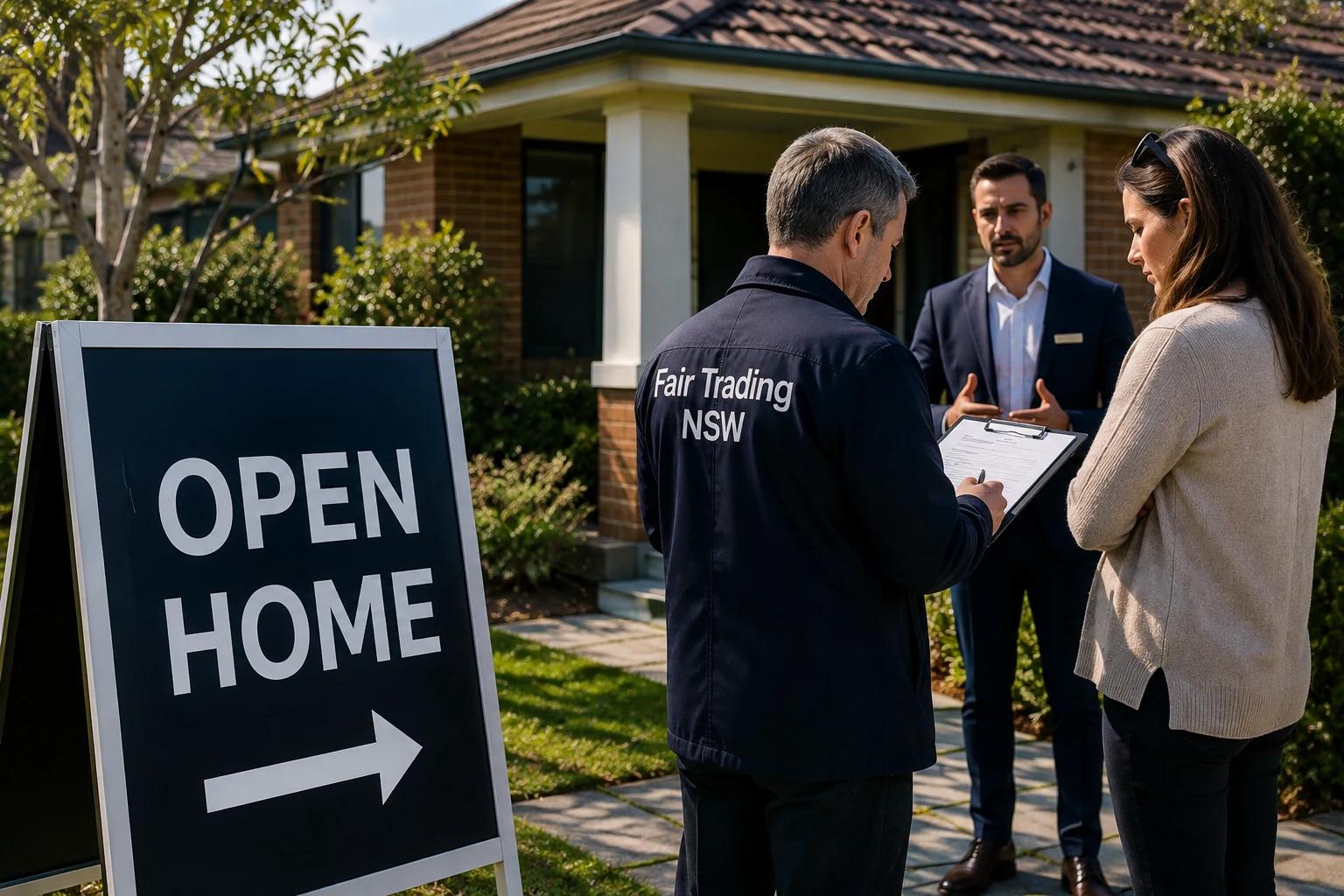
NSW Fair Trading’s Strata and Property Taskforce has used undercover inspections at open homes to test whether agents’ advertised price guidance matches agency records and buyer feedback. The operation resulted in fines, warnings and mandatory education directions, reinforcing the state’s tougher approach to price transparency and underquoting compliance.
Australian gross rental yields are improving as rents remain elevated while property prices weaken. The shift may strengthen cash flow for some established investors, but higher yields can also reflect falling asset values, so investors still need to weigh rental income against financing costs and capital risk.
Housing downturn spreads across 93% of Australian suburbs
Australia’s housing downturn has spread to about 93% of suburbs. Treasurer Jim Chalmers’ Springwood market fell 4.5% over the past three months, with steeper declines recorded in several areas associated with senior Labor figures. Sydney values are now 7.1% below their February peak; Commonwealth Bank expects this cycle could ultimately produce a fall of about 13% in Sydney and roughly 9% nationally. Chalmers acknowledged Labor’s property tax reforms were one factor weighing on the market, while stressing that interest-rate rises had already weakened demand before the budget. Investment properties held by Labor MPs have also been affected, highlighting that federal politicians are more likely than ordinary voters to own multiple properties. Falling home values are beginning to weigh on consumer spending, and renewed rate-rise concerns are keeping buyers cautious, with last week’s auction clearance rate slipping below 50%.
Dwelling approvals fall 3.6% in July as the housing pipeline cools
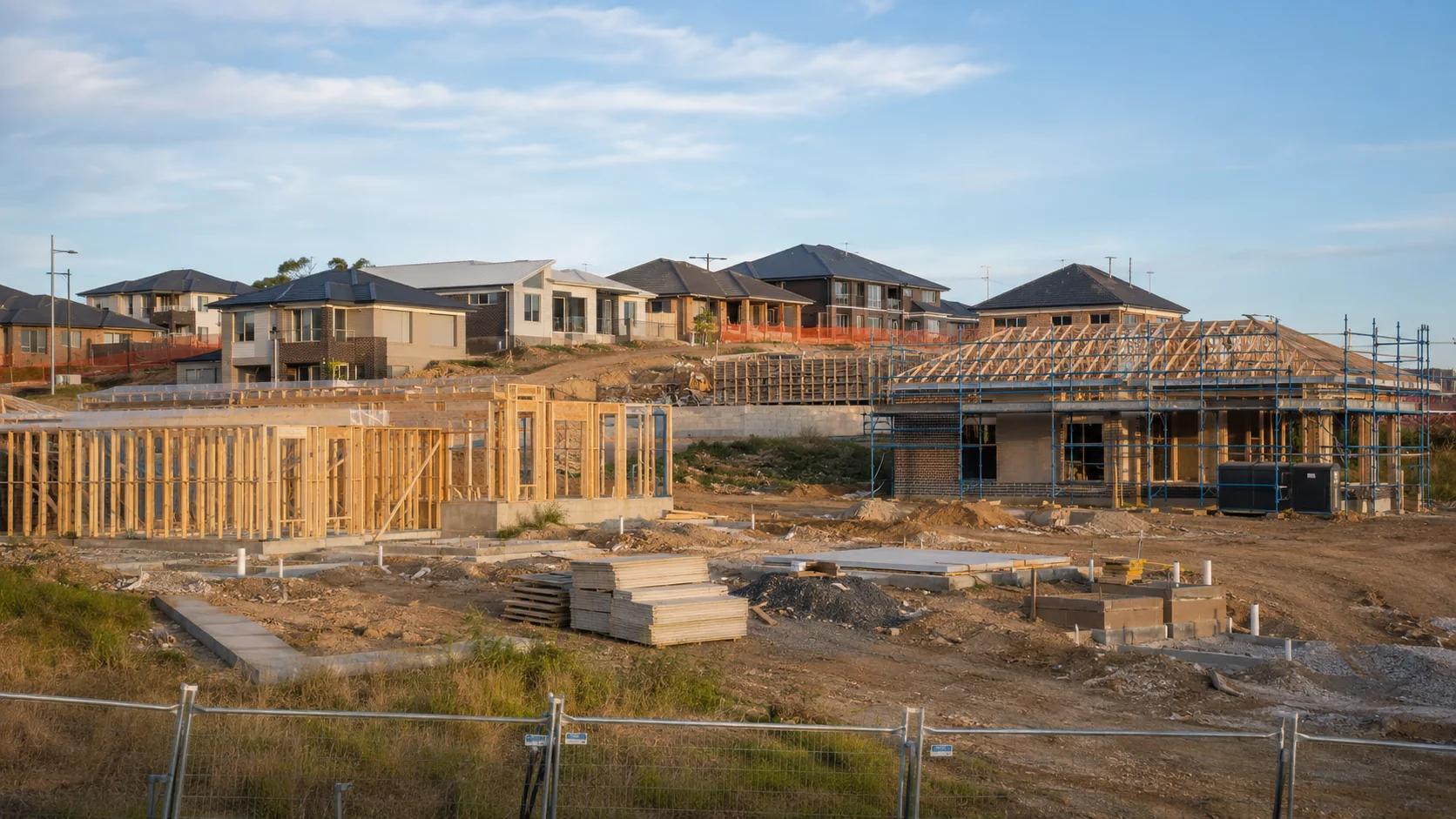
The Australian Bureau of Statistics reports that seasonally adjusted dwelling approvals fell 3.6% in July 2026 to 17,687. Private-sector house approvals declined 4.2% to 10,199, while approvals for private dwellings excluding houses edged down 0.4% to 7,119. The value of total residential building approved fell 4.9% to $11.26 billion. For Sydney owners and investors, the monthly fall is another reminder that the future supply pipeline can remain uneven even while governments are trying to accelerate housing delivery; local approvals, construction starts and completion timing should be assessed separately when considering suburb-level supply pressure.
Australia building approvals — July 2026
Measure
July 2026
Monthly change
Total dwellings approved
17,687
−3.6%
Private-sector houses
10,199
−4.2%
Private dwellings excluding houses
7,119
−0.4%
Residential building value
$11.26b
−4.9%
Seasonally adjusted figures. Source: Australian Bureau of Statistics, Building Approvals, Australia, July 2026.
Sydney asking rents remain 5.2% higher than a year ago
SQM Research's latest weekly asking-rent series shows Sydney combined asking rents at about $909.94 a week for the week ending 28 August 2026, 5.2% higher than a year earlier. House asking rents were about $1,131.67 a week, up 4.2% annually, while unit asking rents were about $758.52, up 6.2%. The combined figure eased 0.6% over the rolling month, highlighting that short-term conditions can soften even while annual rental growth remains positive. For Sydney landlords, city-wide asking rents are a useful trend indicator but individual rent reviews should still rely on current comparable properties, the specific dwelling and NSW tenancy rules.
Sydney asking rents — week ending 28 August 2026
Property type
Weekly asking rent
12-month change
Houses
$1,131.67
+4.2%
Units
$758.52
+6.2%
Combined
$909.94
+5.2%
SQM Research asking-rent series for Sydney. Asking rents are an advertised-market indicator and are not the same as achieved rents for an individual property.
NSW tenancy protections change again from 21 September
NSW Fair Trading says stronger tenancy protections for victim-survivors of domestic violence will commence on 21 September 2026. Among the operational changes, when a domestic violence termination notice is given, responsibility for notifying remaining co-tenants will shift to the landlord or agent, with notification required within seven days. The reforms also expand privacy and security protections, including rules around advertising photos that show a tenant's possessions and broader circumstances in which locks may be changed without landlord consent. Sydney landlords and agents should review procedures before the commencement date so notices, privacy handling, access and tenancy records are managed consistently with the new requirements.
NSW fast-tracks another 1,700 homes through State Significant pathway
The NSW Government has declared a further 10 Housing Delivery Authority proposals as State Significant Development, including eight in metropolitan Sydney and two in regional NSW. If lodged and approved, the projects could deliver more than 1,700 homes, including affordable housing. The HDA pipeline now includes 492 State Significant proposals representing more than 152,000 potential homes; 20 proposals have been approved, unlocking more than 4,000 homes, with 10 projects already under construction. For Sydney owners and investors, the figures point to a substantial future supply pipeline, but declarations are not development approvals and project timing remains subject to assessment, financing and delivery.
Investor housing finance slows sharply as property conditions weaken
Reserve Bank analysis shows new housing loan commitments have declined sharply in recent months, with the fall driven particularly by investors. The RBA says the slowdown reflects softer established housing conditions, higher interest rates and recently announced tax changes affecting property investors, and expects this to flow through to slower housing-credit growth. The shift comes as Sydney values and transaction activity have weakened. For Sydney investors, tighter finance conditions increase the importance of testing borrowing capacity, cash flow and holding costs against current rates rather than relying on earlier market growth assumptions.